Constipation in Pregnancy: Natural Relief That Actually Works
A trimester-by-trimester guide to constipation in pregnancy natural relief — from iron supplements to toilet mechanics, backed by evidence and real mothers' exp
Dr. Chomba Chuma, MD & Founder
MD & Founder, PregBiotics

If you've found yourself straining, bloated, and wondering why something as simple as a bowel movement has become a daily negotiation, you are far from alone. Constipation affects up to half of all pregnant women at some point, and finding safe, constipation in pregnancy natural relief is one of the most common questions I hear in my practice. The good news is that most of it responds beautifully to small, well-timed changes — not laxatives, not guesswork, but an understanding of what's actually happening inside your gut.
This article walks through why pregnancy constipation happens differently in each trimester, the overlooked role of your prenatal iron, and the specific natural strategies that have the best evidence behind them.
Constipation in Pregnancy: Why It Happens Trimester by Trimester
Constipation in pregnancy isn't one condition — it shifts as your pregnancy progresses, driven by different hormones and mechanics at each stage.
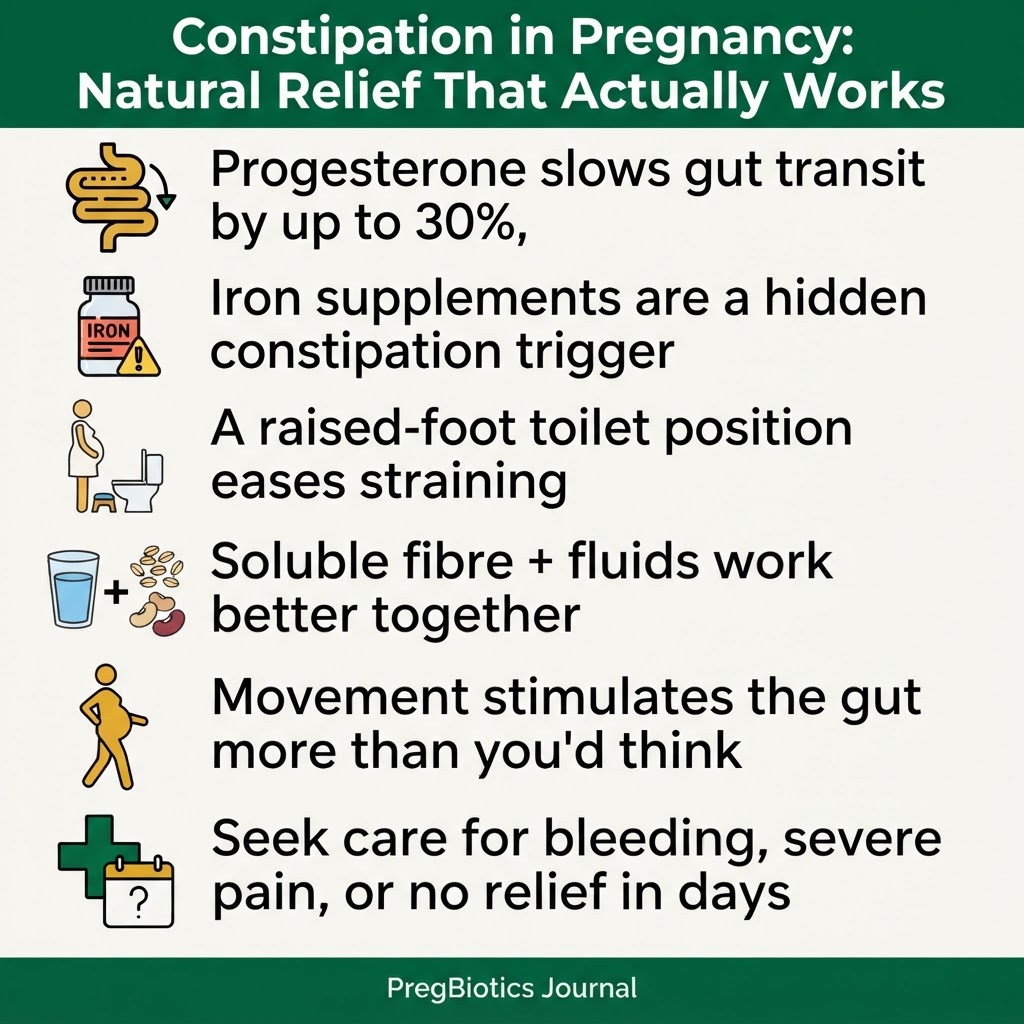
First trimester: Progesterone rises sharply to support the pregnancy, and one of its side effects is relaxing smooth muscle throughout your body — including the muscle lining your intestines. This slows the rhythmic contractions (peristalsis) that normally move waste along, sometimes by as much as 30%.
Second trimester: As progesterone stays elevated and your prenatal vitamin (often containing iron) becomes a daily fixture, stools can become harder and less frequent. This is also when many women first notice haemorrhoids beginning to form.
Third trimester: Your growing uterus now physically presses on the bowel and rectum, reducing the space available for stool to pass. Reduced mobility in late pregnancy can compound the problem further.
"Constipation is reported by up to 38% of pregnant women, with prevalence varying by trimester and influenced by hormonal, mechanical, and dietary factors." — Trottier M, Erebara A, Bozzo P, Canadian Family Physician, 2012
Understanding which stage you're in helps you choose the right relief strategy rather than applying a one-size-fits-all fix.
The Iron Supplement Connection Most Mothers Aren't Told About
Here's something rarely explained clearly at your first antenatal visit: the iron in your prenatal supplement is one of the most common, and most fixable, causes of pregnancy constipation.
Iron supplements — particularly ferrous sulfate, the most commonly prescribed form in South Africa — can bind with water in the gut and slow transit time considerably. For many women, constipation only becomes a real problem after starting or increasing their iron dose.
This doesn't mean skipping iron, which remains essential for both you and your baby. It means working with your healthcare provider on practical adjustments:
- Ask whether a gentler iron formulation (such as iron bisglycinate) is appropriate for you
- Taking iron with vitamin C-rich food may improve absorption so lower doses remain effective
- Splitting the dose across the day, rather than one large dose, can ease the digestive load
- Never stop or reduce prescribed iron without speaking to your healthcare provider first, particularly if you've had low ferritin or anaemia
Constipation in Pregnancy Natural Relief: What the Evidence Supports
When mothers ask me for constipation in pregnancy natural relief that's actually backed by research rather than old wives' tales, these are the strategies I return to again and again.
Fibre — But the Right Kind
Not all fibre behaves the same way. Soluble fibre (oats, psyllium, chia seeds, pears, flaxseed) absorbs water and forms a gel that softens stool gently. Insoluble fibre (wheat bran, raw vegetable skins) adds bulk but can worsen bloating if introduced too quickly or without enough fluid.
A practical approach:
- Start with 2–3 tablespoons of ground flaxseed or soaked chia seeds daily
- Increase fibre gradually over 1–2 weeks rather than all at once
- Pair every fibre increase with extra water — fibre without fluid can make constipation worse, not better
Fluids and Electrolytes
Pregnancy increases your blood volume by up to 50%, and your fluid needs rise with it. Aim for at least 2–2.5 litres of water daily, and consider that warm fluids (herbal tea, warm water with lemon) can stimulate bowel motility more effectively than cold drinks first thing in the morning.
Movement, Even in Small Doses
A 10–15 minute walk after meals stimulates the gastrocolic reflex — the body's natural signal to move waste along after eating. This is particularly useful in the third trimester when a full exercise routine may feel out of reach.
"Regular physical activity throughout pregnancy, where not contraindicated, is associated with improved bowel function and overall maternal wellbeing." — World Health Organization, Antenatal Care Guidelines, 2016
Magnesium-Rich Foods
Magnesium relaxes intestinal muscle and draws water into the bowel, softening stool naturally. Pregnant women are frequently low in magnesium, partly due to increased demand. Foods like leafy greens, almonds, pumpkin seeds, and bananas can help, though your healthcare provider may also discuss supplementation if dietary intake isn't enough.
The Toilet Position Trick Nobody Mentions
This is one of the simplest, most overlooked tools for constipation relief — and it costs nothing.
Sitting on a standard toilet puts your pelvic floor at an angle that partially kinks the rectum, making it harder to fully empty. Raising your feet on a small stool (10–20cm) while on the toilet straightens this angle, allowing for easier, less strained passage.
- Lean forward slightly with elbows on knees
- Keep feet raised on a low stool or stack of books
- Avoid straining or holding your breath — breathe out gently instead
This small mechanical shift can meaningfully reduce both the effort and the risk of haemorrhoids, which are closely linked to prolonged straining.
When Constipation Signals Something More
Most pregnancy constipation is uncomfortable but not dangerous. However, there are situations where you should contact your healthcare provider promptly:
- Severe abdominal pain that doesn't ease
- Rectal bleeding or blood in the stool
- No bowel movement for more than 5–7 days despite trying the above
- Signs of haemorrhoids that are painful, swollen, or bleeding persistently
- Nausea or vomiting accompanying the constipation
"Persistent or severe constipation in pregnancy warrants clinical assessment to rule out other contributing conditions and to guide safe management." — American College of Obstetricians and Gynecologists, Digestive Health in Pregnancy FAQ
Your healthcare provider may recommend a pregnancy-safe stool softener if lifestyle changes aren't enough — this is common, safe, and nothing to feel discouraged about.
Why Your Gut's Daily Rhythm Matters Beyond Comfort
Constipation isn't just uncomfortable — a sluggish gut can also affect how efficiently you absorb nutrients your baby needs, and it often travels alongside bloating and mild nausea. We've explored the bigger picture of these shifts in Why Your Gut Health Changes Dramatically During Pregnancy, and the foundational science behind it in The Gut Microbiome 101.
Supporting a diverse, well-functioning gut microbiome throughout pregnancy is associated with more regular digestion, alongside other wellbeing benefits — though it works best as one part of a broader approach, not a substitute for the fundamentals of fibre, fluid, and movement.
Your Simplest First Step
If constipation has been wearing you down, start small: raise your feet at the toilet, add one soluble fibre source today, and take a short walk after your largest meal. These three changes alone resolve the majority of mild to moderate pregnancy constipation within a week or two.
For ongoing, daily gut support throughout pregnancy, explore PregBiotics Essentials, formulated to support digestive comfort and a balanced microbiome through every trimester.
And if you'd like more guidance like this delivered straight to you, subscribe to the PregBiotics Journal — we're here for every stage of this journey, one evidence-based article at a time.
Get the PregBiotics Journal in your inbox
Gut-smart guidance for conception, pregnancy and breastfeeding — twice a week, plus member-only offers. Unsubscribe anytime.
You deserve to feel beautifully supported.
Join thousands of mothers on the PregBiotics journey. Receive your free Pregnancy Prep Guide and gentle, science-backed wisdom — tailored to where you are right now.