Group B Streptococcus in Pregnancy: What Every Mother Needs to Know About GBS Screening, Prevention & Gut Health
Imagine this: you're 36 weeks pregnant, feeling the beautiful weight of anticipation, when your midwife mentions a routine swab test and the words "Group B Strep." Suddenly, a condition you've never heard of is being discussed in relation to your newborn's safety. You leave the appointment with more
Dr. Chomba Chuma, MD & Founder
MD & Founder, PregBiotics

Group B Streptococcus in Pregnancy: What Every Mother Needs to Know About GBS Screening, Prevention & Gut Health
By Dr. Chomba Chuma, MD & Founder | PregBiotics Journal
Introduction
Imagine this: you're 36 weeks pregnant, feeling the beautiful weight of anticipation, when your midwife mentions a routine swab test and the words "Group B Strep." Suddenly, a condition you've never heard of is being discussed in relation to your newborn's safety. You leave the appointment with more questions than answers — and you're not alone.
Here's a statistic that often surprises people: Group B Streptococcus (GBS) colonises the gut and vaginal tract of approximately 1 in 5 pregnant women in the UK and US. For most mothers, it causes no symptoms whatsoever. Yet without proper screening and management, it can be passed to a newborn during labour, leading to serious — and occasionally life-threatening — early-onset infections.
The good news? GBS in pregnancy is manageable, well-researched, and increasingly understood in the context of maternal gut and vaginal microbiome health. And that's exactly why I'm writing this article.
In the pages that follow, I'm going to walk you through everything you need to know: what GBS actually is, how GBS screening in pregnancy works, what the science says about your microbiome's role in colonisation, and how targeted nutritional support — including our GBS Shield Protocol — can form part of a comprehensive, proactive approach to maternal and newborn health.
Knowledge is power. And when it comes to protecting your baby, you deserve all of it.
Understanding Group B Streptococcus: The Science Behind the Bacteria
What Is GBS?
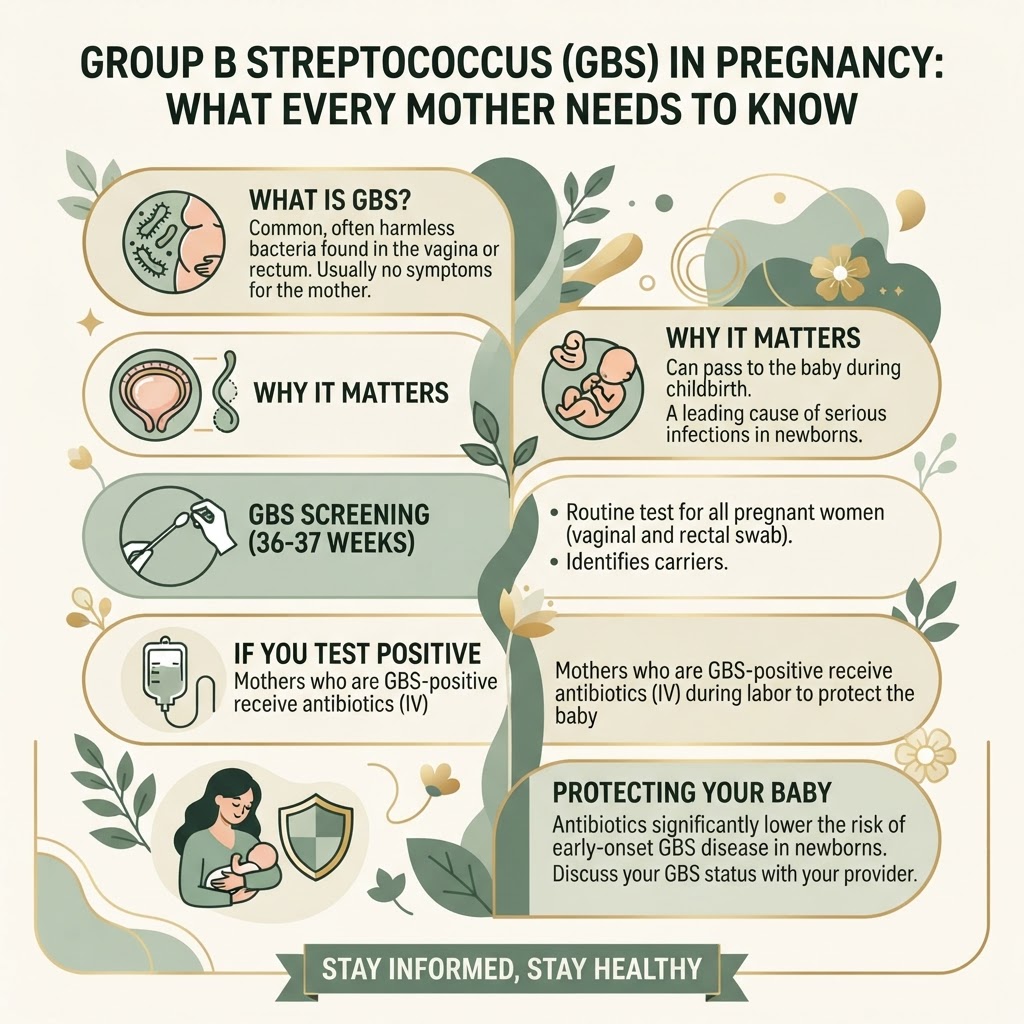
Group B Streptococcus — formally known as Streptococcus agalactiae — is a gram-positive bacterium that naturally inhabits the gastrointestinal and genitourinary tracts of many healthy adults. It is not a sexually transmitted infection, nor is it a sign of poor hygiene. In most non-pregnant adults, GBS colonisation is entirely harmless and often transient.
However, during pregnancy, the implications shift significantly. GBS can colonise the vagina, cervix, and lower urinary tract, and during labour and birth, there is a risk of vertical transmission — meaning the bacteria can be passed from mother to baby through the birth canal or ascending infection through ruptured membranes.
Why Does It Matter for Newborns?
Newborns have immature immune systems that are ill-equipped to fight bacterial infections in the early days of life. When GBS is transmitted during birth, it can cause:
- Early-onset GBS disease (within the first 7 days of life): presenting as sepsis, pneumonia, or meningitis
- Late-onset GBS disease (7 days to 3 months): more commonly associated with meningitis
According to Group B Strep Support UK, GBS is the most common cause of severe bacterial infection in newborns in the UK, with around 340 babies developing GBS infection each year — and tragically, approximately 22 of those babies will not survive.
The Microbiome Connection
Here's where the science gets particularly compelling, and where I believe we're entering a genuinely exciting era of preventive maternal health.
Emerging research published in journals such as the American Journal of Obstetrics and Gynecology has demonstrated a clear link between the composition of the maternal vaginal and gut microbiome and GBS colonisation status. Specifically, women with a Lactobacillus-dominant vaginal microbiome — particularly Lactobacillus crispatus — show significantly lower rates of GBS colonisation.
Lactobacillus species produce lactic acid and hydrogen peroxide, creating an acidic vaginal environment that is hostile to pathogenic bacteria, including GBS. When this protective layer is disrupted — a state known as dysbiosis — opportunistic bacteria like GBS can thrive.
This is not just theoretical. A 2019 study in PLOS ONE found that GBS-colonised women had significantly lower Lactobacillus abundance and higher microbial diversity in the vaginal microbiome — a pattern consistent with dysbiosis.
The gut microbiome also plays a supporting role. Because GBS colonises the gastrointestinal tract first before ascending to the vagina, gut microbial health forms a critical upstream line of defence.
Who Is at Higher Risk?
Certain factors are associated with increased risk of GBS colonisation or of the baby developing GBS disease, including:
- Previous baby affected by GBS
- GBS detected in urine during current pregnancy (bacteriuria)
- Preterm labour (before 37 weeks)
- Prolonged rupture of membranes (over 18 hours)
- Fever during labour
- Vaginal or gut dysbiosis
What GBS Means For You: Making the Science Practical
Understanding the biology is one thing — but what does this actually mean for your pregnancy journey? Let me break it down clearly and practically.
GBS Screening in Pregnancy: What to Expect
In the UK, GBS screening is not currently offered as part of the routine NHS antenatal programme, though many mothers choose to access private testing. In the US and many other countries, universal screening is recommended between 35–37 weeks of gestation using a combined vaginal-rectal swab.
Key facts about GBS screening:
- The swab is quick, simple, and painless — much like a routine vaginal examination
- A positive result does not mean your baby will develop GBS disease; it means intrapartum antibiotic prophylaxis (IAP) will be offered during labour
- A negative result at 35–37 weeks significantly reduces (but does not eliminate) the risk of GBS transmission
- GBS colonisation status can change over time — a negative result earlier in pregnancy does not guarantee a negative result at term
If you are in the UK and wish to be tested, Group B Strep Support UK offers guidance on accessing private ECM (enriched culture medium) testing, which is considered the gold standard.
If You Test Positive: What Happens Next?
A positive GBS test does not mean a crisis. It means your care team will be informed and will offer you intrapartum antibiotic prophylaxis (IAP) — typically intravenous penicillin administered during labour. This intervention is highly effective at preventing early-onset GBS disease in newborns.
Here's what to keep in mind:
- Discuss your birth plan early: Let your midwife or obstetrician know about your GBS status well before your due date
- Arrive at hospital promptly when labour begins — early antibiotic administration is important
- Inform your team if your waters break before labour starts
- Ask questions: You have every right to a thorough conversation about your options, including if you have a penicillin allergy
- Consider your microbiome proactively: Antibiotics during labour, while necessary, will impact both your gut microbiome and your baby's developing microbiome — supporting recovery with targeted probiotics postpartum is something I discuss in the Pregnancy Gut Guide
What If You Test Negative?
A negative GBS swab is reassuring, but it's not a reason to become complacent about vaginal and gut microbiome health. Supporting a Lactobacillus-dominant environment throughout pregnancy remains beneficial for reducing colonisation risk, supporting overall vaginal health, and preparing your microbiome for birth and the fourth trimester.
The Role of Nutrition, Probiotics & Supplementation in GBS Prevention
This is the section I feel most passionate about — and where I want to be very clear about what the science currently supports and what remains an area of active research.
Let me say this plainly: probiotics and nutritional supplementation are not a replacement for GBS screening or intrapartum antibiotics when indicated. They are complementary tools that support microbiome resilience, reduce dysbiosis risk, and may — based on emerging evidence — contribute to a lower likelihood of GBS colonisation.
The Evidence for Probiotics and GBS
A systematic review published in Frontiers in Microbiology (2020) explored the relationship between Lactobacillus supplementation and GBS colonisation, noting that probiotic interventions showed promise in reducing GBS carriage rates, particularly when L. rhamnosus and L. reuteri strains were used. While the authors called for larger randomised controlled trials, the mechanistic rationale is sound: restoring Lactobacillus dominance creates an environment less hospitable to GBS.
Key Nutrients and Strains to Know
Supporting your microbiome during pregnancy involves several targeted ingredients:
- Lactobacillus rhamnosus GR-1 — one of the most studied strains for vaginal microbiome health; shown to colonise the vaginal tract when taken orally
- Lactobacillus reuteri RC-14 — works synergistically with GR-1 to support Lactobacillus dominance and reduce pathogen adherence
- Lactobacillus crispatus — the keystone species of a healthy vaginal microbiome; associated with lowest GBS colonisation rates
- Vitamin C (ascorbic acid) — supports vaginal epithelial integrity and immune defence
- Zinc — essential for immune function and mucosal barrier health
- Vitamin D3 — emerging evidence supports its role in reducing vaginal dysbiosis and supporting innate immunity
- Prebiotics (FOS/GOS) — feed beneficial Lactobacillus species in the gut, supporting upstream microbiome balance
Introducing the GBS Shield Protocol
The GBS Shield Protocol was developed specifically in response to the gap I saw in clinical practice: mothers asking what they could proactively do to support their microbiome health in the context of GBS risk. The protocol combines precision-selected probiotic strains, evidence-informed nutrients, and dietary guidance, designed to be used from the second trimester onwards.
The GBS Shield Protocol is not a treatment for GBS. It is a science-led, gut-and-vaginal-microbiome support programme that gives your body the best possible environment to resist opportunistic bacterial colonisation — including GBS — while also preparing your microbiome for the demands of labour, birth, and the postpartum period.
Expert Tips & Actionable Advice for GBS Pregnancy Management
As both a physician and someone deeply invested in maternal microbiome science, here are my most practical recommendations for navigating GBS in pregnancy:
-
Request GBS screening proactively. If you're in the UK and not offered routine screening, discuss private ECM testing with your midwife or GP between 35–37 weeks. Early knowledge is early power.
-
Start microbiome support early. Don't wait until 35 weeks to think about your gut and vaginal microbiome. Begin supporting Lactobacillus dominance from the second trimester with targeted probiotic strains and a fibre-rich anti-inflammatory diet.
-
Eat for your microbiome. A diet rich in fermented foods (live yoghurt, kefir, sauerkraut), colourful vegetables, legumes, and whole grains feeds beneficial bacteria. Limit ultra-processed foods and added sugars, which promote dysbiosis.
-
Avoid unnecessary antibiotics during pregnancy. This is not about refusing necessary treatment — it's about not self-medicating or overusing antibiotics for viral illnesses that won't respond to them. Each course of antibiotics disrupts your microbiome ecosystem.
-
Know your birth plan in detail. If you test GBS positive, ensure your birth preferences document notes your need for IV antibiotics in labour. Tell your birth partner too — they can advocate for you if needed.
-
Support your baby's microbiome from birth. If you received intrapartum antibiotics, your baby's microbiome will also be impacted. Breastfeeding is one of the most powerful ways to seed a healthy infant microbiome. Infant-appropriate probiotic drops (discuss with your paediatrician) may also be considered.
-
Don't catastrophise a positive result. A GBS-positive swab is common and manageable. With appropriate intrapartum care, the risk of your baby developing GBS disease is very low. Stay informed, stay calm, and stay connected to your care team.
-
Use trusted resources. The Group B Strep Support UK charity provides excellent, evidence-based information for parents and healthcare professionals alike.
When to Seek Medical Advice
While this article is designed to inform and empower, it is essential to be clear: nothing here replaces personalised medical advice from your GP, midwife, or obstetrician.
Please contact your healthcare provider promptly if:
- You experience any burning or pain when urinating during pregnancy — this could indicate GBS bacteriuria, which carries higher risk and always requires treatment
- You have a history of a previous baby affected by GBS disease
- You go into labour before 37 weeks
- Your waters break before labour begins, particularly if you are GBS positive
- You develop a fever during labour
- Your newborn shows any signs of illness in the first weeks of life — including unusual sleepiness, poor feeding, high-pitched crying, temperature instability, or breathing difficulties
GBS infection in newborns is a medical emergency. If you have any concern about your baby after birth, seek urgent medical attention without delay.
Conclusion
Group B Streptococcus is one of those topics that many mothers encounter without warning — and leave feeling anxious, overwhelmed, or under-informed. My hope is that this article changes that experience for you.
Here's what I want you to take away: GBS colonisation is common, it is not your fault, and it is manageable. Modern obstetric care — combined with proactive microbiome support — gives you powerful tools to protect both yourself and your baby. GBS screening in pregnancy remains one of the most important conversations you can have with your care team in the third trimester.
The emerging science on probiotics and GBS is genuinely exciting, and it aligns with everything I believe about maternal health: that the gut microbiome is not a passive bystander in pregnancy, but an active, modifiable system that deserves our attention and care. Our GBS Shield Protocol was built to honour that science and to give mothers practical, evidence-led support.
You are not powerless in this journey. You are informed, proactive, and supported.
If you'd like to explore more science-backed guidance on maternal gut health, I warmly invite you to read more on The PregBiotics Journal — where we translate complex research into the clear, compassionate guidance every mother deserves.
With care and science, Dr. Chomba Chuma, MD Founder, PregBiotics
This article is intended for informational purposes only and does not constitute medical advice. Always consult a qualified healthcare professional regarding your individual pregnancy care.
Get the PregBiotics Journal in your inbox
Gut-smart guidance for conception, pregnancy and breastfeeding — twice a week, plus member-only offers. Unsubscribe anytime.
You deserve to feel beautifully supported.
Join thousands of mothers on the PregBiotics journey. Receive your free Pregnancy Prep Guide and gentle, science-backed wisdom — tailored to where you are right now.