What to Eat When Trying to Conceive: A Food-First Fertility Guide
Discover what to eat when trying to conceive — practical, food-first fertility nutrition, gut-friendly meals, and South African plate ideas for conception.
Dr. Chomba Chuma, MD & Founder
MD & Founder, PregBiotics
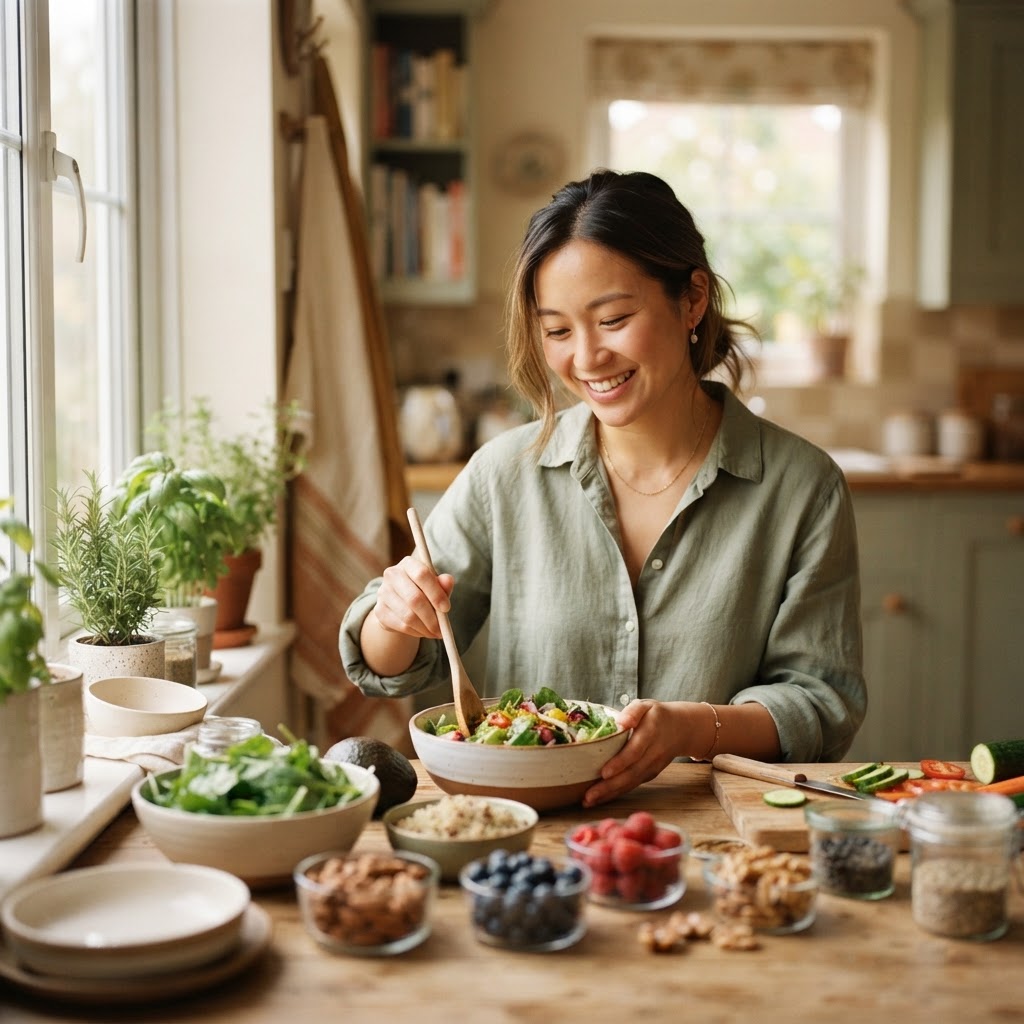
Deciding what to eat when trying to conceive can feel like navigating a maze of conflicting advice — one article tells you to cut carbs, another insists on daily avocado, and somewhere in between you're wondering if any of it actually matters. As a doctor who has sat across from many South African women on this journey, I can tell you this: what to eat when trying to conceive is less about chasing a single "superfood" and more about building a consistent, nourishing pattern that supports your hormones, your egg quality, and the uterine environment your future baby will depend on.
This article takes a food-first approach. Rather than listing isolated nutrients (we've covered those in detail elsewhere), we're going to talk about what actually ends up on your plate — the meals, the combinations, and the everyday choices that add up over the three to six months it typically takes your body to prepare an egg for ovulation.
What to Eat When Trying to Conceive: Why Patterns Beat Perfection
Research on fertility nutrition consistently points to dietary patterns rather than individual foods as the stronger predictor of reproductive outcomes. Diets resembling the Mediterranean pattern — rich in vegetables, legumes, whole grains, olive oil, nuts and fish, with modest amounts of red meat — have been associated with improved markers of fertility in several observational studies.
"Adherence to a Mediterranean-style diet has been associated with improved fertility outcomes in women undergoing assisted reproduction." — Systematic review, Human Reproduction Update, as summarised on PubMed
This doesn't mean you need to overhaul your entire culinary identity overnight. It means that, more often than not, your plate should lean toward whole, minimally processed foods rather than packaged convenience options. Small, sustainable shifts tend to outperform dramatic short-term diets.
If you haven't already, it's worth reading our deep dive on the essential nutrients every woman should optimise before trying to conceive — this article builds on that foundation by showing you how those nutrients translate into real meals.
Building Your Fertility Plate: The Basics
Think of your plate in sections rather than counting calories or grams. This approach is simpler to sustain and naturally covers most nutritional bases.
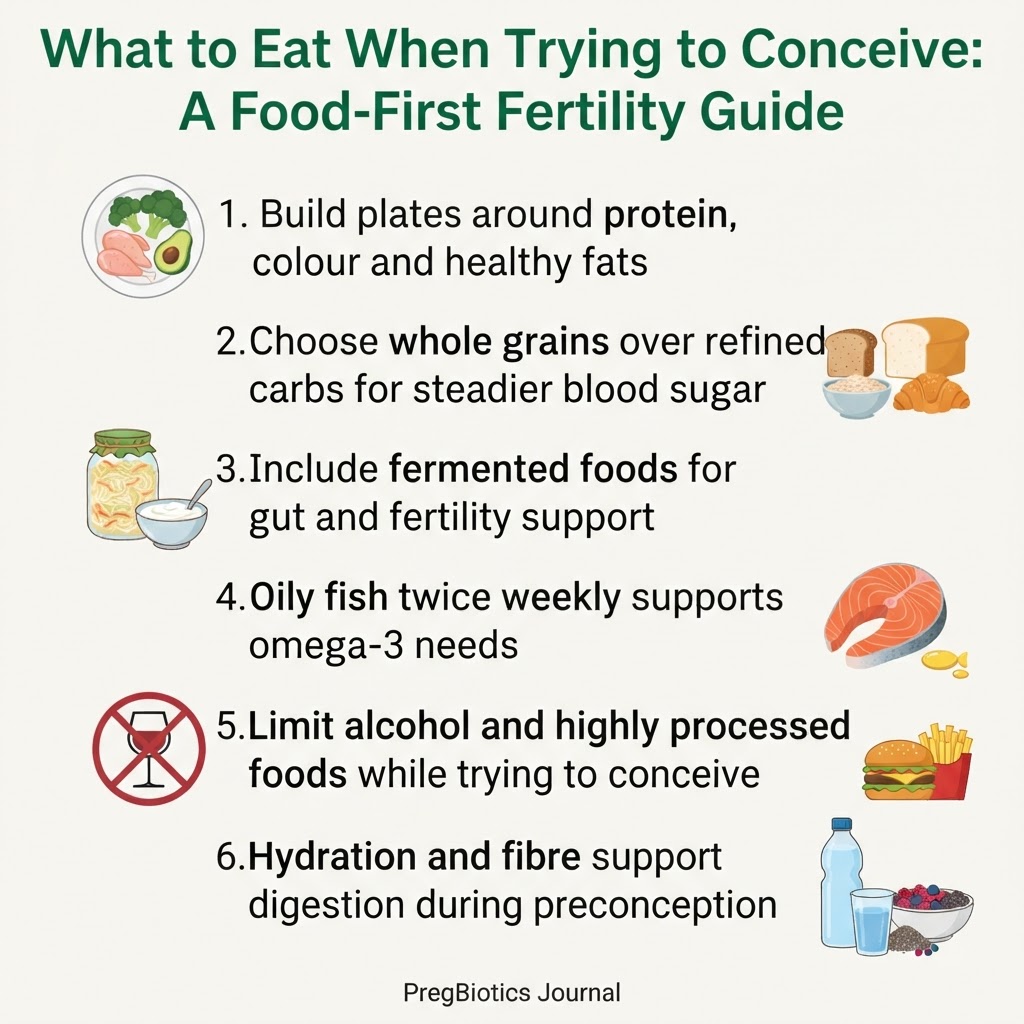
Protein, every meal
Protein supports hormone production and helps stabilise blood sugar, which in turn supports ovulatory function. Good preconception sources include:
- Eggs (a convenient source of choline and protein)
- Legumes — lentils, chickpeas, sugar beans
- Fish, especially oily varieties like pilchards, salmon or mackerel
- Poultry and lean red meat in moderation
- Greek yoghurt or plain maas
Complex carbohydrates over refined ones
Swapping white bread, white rice and sugary cereals for whole grains (brown rice, oats, samp, whole-wheat pap) may help keep insulin levels steadier. This matters because insulin resistance is closely linked to ovulatory irregularities, particularly in conditions like PCOS.
Healthy fats
Avocado, olive oil, nuts, seeds and oily fish provide the fats your body uses to produce reproductive hormones. Aim for oily fish two to three times a week where possible — we've written extensively about the omega-3 and DHA story in our article on DHA and Omega-3 in Pregnancy, and the same benefits apply when you're laying groundwork before conception.
Colour, colour, colour
Vegetables and fruit supply folate, antioxidants and fibre. Dark leafy greens (spinach, morogo), citrus, berries and brightly coloured vegetables like butternut and peppers are excellent, affordable choices widely available in South African markets.
What to Eat When Trying to Conceive — A Sample Day
Here's a realistic, budget-conscious example of how this looks in practice:
- Breakfast: Oats cooked with milk, topped with chopped nuts and a handful of berries
- Mid-morning: Plain yoghurt or maas with a piece of fruit
- Lunch: Lentil and vegetable stew with brown rice or samp
- Afternoon: A boiled egg and a small handful of almonds
- Dinner: Grilled pilchards or salmon, steamed greens, and roasted sweet potato
- Evening: Herbal tea (caffeine-free) if desired
This isn't a prescription — it's a template. The goal is variety, consistency and enjoyment, not restriction.
The Overlooked Role of Gut-Supportive Foods
Your digestive system does more than process food — it plays a role in hormone metabolism and nutrient absorption, both relevant when you're trying to conceive. Including fermented foods such as plain yoghurt, kefir, and traditional fermented vegetables can support a diverse gut environment.
"A diverse gut microbiota is increasingly recognised as a contributing factor in metabolic and reproductive health." — World Health Organization, nutrition and nutrition-related NCD guidance
For a fuller picture of why this connection matters specifically for conception, our article on how your gut microbiome affects fertility and your ability to conceive explores the science in more depth. In short: food choices that support gut diversity may complement the broader nutritional strategy outlined here.
Foods and Habits to Approach With Caution
While this article focuses on what to add rather than what to fear, a few evidence-based cautions are worth noting while trying to conceive:
- Alcohol: Current guidance from the World Health Organization suggests there is no known safe level of alcohol consumption, and many preconception guidelines recommend minimising or avoiding it once you're actively trying.
- High-mercury fish: Large predatory fish such as shark, swordfish and some tuna should be limited due to mercury content.
- Highly processed foods: Regularly high intake of ultra-processed foods has been associated in observational research with poorer metabolic markers relevant to fertility.
- Excess caffeine: Most guidelines, including those referenced by ACOG, suggest moderating caffeine intake, generally to under 200mg per day.
- Unpasteurised dairy and undercooked meat: These carry listeria and toxoplasmosis risks and are best avoided from the preconception period onward.
None of these need to be approached with fear or guilt — simply awareness. Speak to your healthcare provider about your individual circumstances, particularly if you have underlying conditions like PCOS, thyroid disorders, or a history of pregnancy loss.
Common Questions About Eating for Fertility
Do I need to go dairy-free or gluten-free?
Unless you have a diagnosed intolerance, there is no strong evidence that eliminating entire food groups improves fertility. Restrictive diets can sometimes reduce intake of important nutrients like calcium and iodine, so this is a conversation to have with a healthcare provider or registered dietitian first.
Should I eat more if I'm trying to conceive?
Most women don't need significantly more calories during the preconception phase itself — the emphasis is on nutrient quality and variety rather than quantity. This changes once pregnancy is confirmed.
How long before I should start eating this way?
Because eggs take roughly three months to mature before ovulation, many clinicians, including guidance referenced by SASOG, suggest beginning preconception nutritional changes at least three months before actively trying — though any positive change at any point is valuable.
What about my partner's diet?
Sperm health is also influenced by diet, particularly antioxidant intake, zinc, and reducing processed food and alcohol consumption. Fertility nutrition is a shared project, not just the woman's responsibility.
Your Simplest First Step
You don't need to redesign your entire diet this week. Start with one meal: swap a refined carbohydrate for a wholegrain, add a source of protein, and include one colourful vegetable or fruit. Build from there.
If you're looking for additional preconception support alongside your nutrition, our PregBiotics Conception formula was developed to complement — not replace — a nourishing, whole-food approach to preparing your body for pregnancy. As always, speak to your healthcare provider before starting any new supplement, especially if you have existing health conditions.
If today's article was useful, consider subscribing to the PregBiotics Journal for more evidence-informed guidance on fertility, pregnancy, and postpartum gut health — written specifically with South African mothers in mind.
Get the PregBiotics Journal in your inbox
Gut-smart guidance for conception, pregnancy and breastfeeding — twice a week, plus member-only offers. Unsubscribe anytime.
You deserve to feel beautifully supported.
Join thousands of mothers on the PregBiotics journey. Receive your free Pregnancy Prep Guide and gentle, science-backed wisdom — tailored to where you are right now.